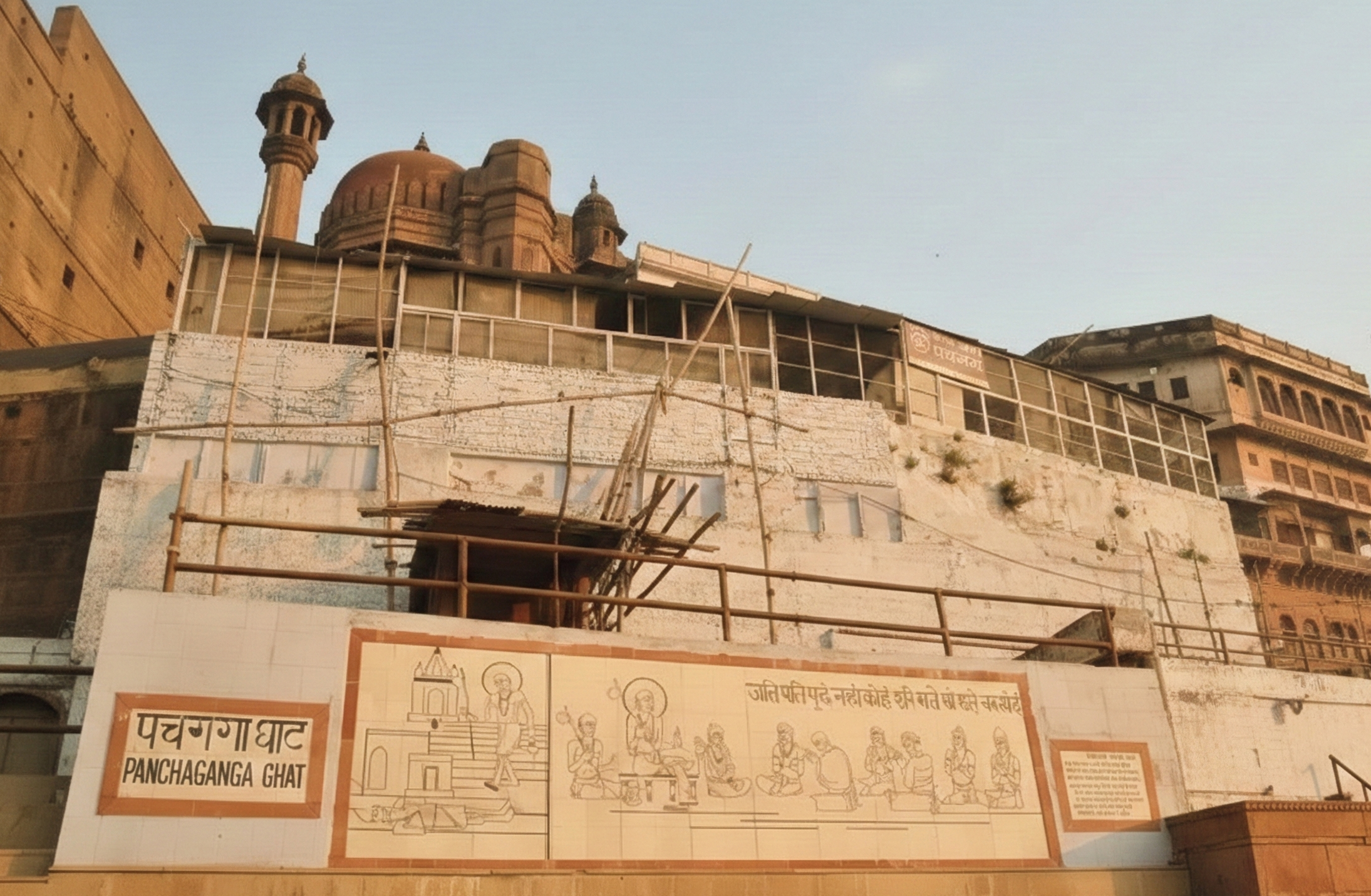
Overview
Planning a trip to the spiritual capital of India? While most travelers flock to the famous evening Aarti at Dashashwamedh, those seeking the "true soul" of Kashi head north to Panchganga Ghat. While many tourists flock to the neon lights of Dashashwamedh or the intensity of Manikarnika, Panchganga offers a different soul - one defined by ancient confluences and architectural layers.
History and Spiritual Importance
The name Panchganga literally translates to "Five Gangas." According to Vedic tradition, this ghat marks the holy Sangam (confluence) of five sacred rivers:
The Ganga
The Yamuna
The Saraswati
The Kirana
The Dhutapapa
While only the Ganga is visible to the naked eye, the others are believed to meet here ethereally. Historically, this was the site of the original Bindu Madhav Temple, a massive 12th-century structure dedicated to Lord Vishnu. In the 17th century, the Mughal Emperor Aurangzeb constructed the Alamgir Mosque (also known as Beni Madhav ka Darera).
Why You Should Visit Panchganga Ghat
Unlike the crowded central ghats, Panchganga offers:
Authentic Spirituality: Witness local scholars and sadhus practicing ancient Vedic rituals.
Architectural Contrast: The sight of the towering Islamic minarets standing atop ancient Hindu stone steps is a visual representation of India’s layered history.
Peace and Quiet: It is significantly quieter than other major ghats, making it ideal for meditation and photography.
How to Reach Panchganga Ghat (Directions)
Panchganga is located in the northern part of the Varanasi riverfront.
By Boat: The best way to reach is by taking a boat from Dashashwamedh Ghat. It’s a peaceful 20-minute ride.
On Foot: You can walk through the famous narrow alleys (galis) from Chowk or Maidagin. This is the best way to see the local lifestyle.
By Rickshaw: Take an e-rickshaw to Maidagin, followed by a 10-minute walk through the heritage lanes.
Heading to the Ghats? Book our Cab Service and beat the traffic.
Top Things to Do at Panchganga Ghat
Take a Holy Dip: Bathing at this confluence is considered one of the most merit-earning acts in Hinduism.
Visit the Bindu Madhav Temple: Located just behind the mosque, this temple houses a beautiful deity of Lord Vishnu.
Explore the Alamgir Mosque: Admire the fusion of Hindu-Muslim architectural styles and the panoramic views of the Ganga.
Witness Dev Deepawali: If you visit during the month of Kartik (Oct/Nov), you will see the famous Akash Deep—oil lamps lit in baskets and hoisted on tall bamboo poles to honor ancestors.
Nearby Attractions
Manikarnika Ghat (5-min walk): The main cremation ghat, essential for understanding the cycle of life and death in Kashi.
Scindia Ghat: Home to the "Leaning Temple of Varanasi" (Ratneshwar Mahadev).
Kashi Vishwanath Temple: The city’s primary deity, located about 15 minutes away through the labyrinthine streets.
Visitor Tips
Best time to visit: Arrive at sunrise. The golden light hitting the stone masonry is breathtaking.
Ideal experience: View from a boat ride to appreciate the scale and architecture.
Dress modestly: Wear modest clothing that covers shoulders and knees to respect the local religious sentiments.
Photography: While photography is allowed on the ghat, always ask for permission before taking photos of sadhus or inside temples.
Combine visits: Pair with Kashi Vishwanath, Manikarnika Ghat, and Alamgir Mosque in a heritage circuit.
Less crowded: Quieter than Dashashwamedh, suitable for reflection.
Footwear: Remove shoes near temple areas.
Walking caution: Steps can be steep and uneven.