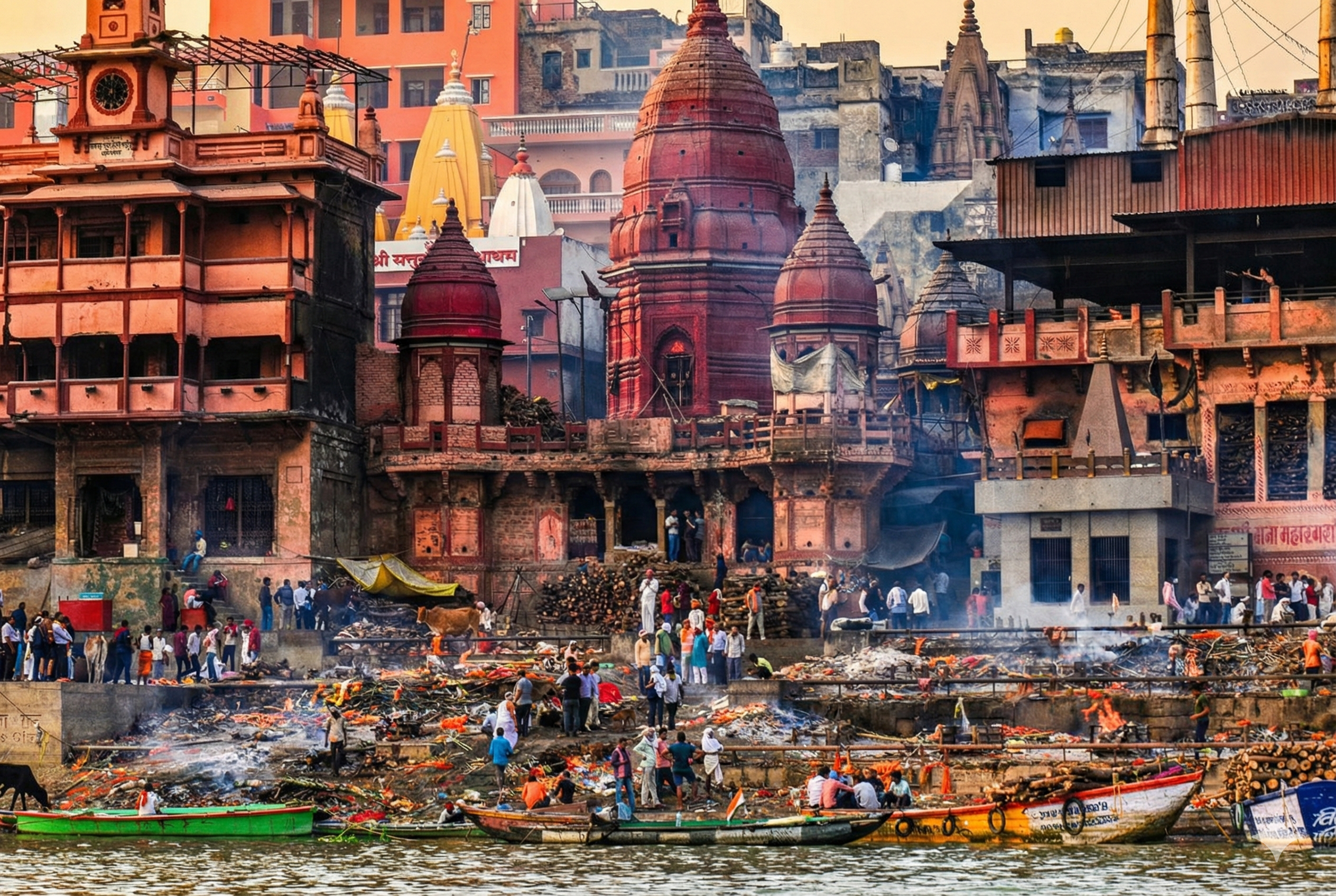
Overview
Varanasi is a city that doesn't just show you life; it stares death in the face and calls it beautiful. At the heart of this paradox lies Manikarnika Ghat, the primary cremation site of the Hindus. It is a place of profound silence amidst chaotic noise, where the "eternal flame" is said to have burned for centuries.
The Gateway of Heaven
Manikarnika Ghat is the primary cremation site among the 84 ghats lining the River Ganges in Varanasi. Unlike other landmarks, Manikarnika is a working religious site where the "eternal flame" burns 24/7. For Hindus, it is the most auspicious place to depart the physical world, as it is believed to provide an immediate path to salvation.
History & Spiritual Importance
Manikarnika Ghat in Varanasi is one of the holiest cremation grounds in Hinduism. Its name comes from the Sanskrit words "Mani" (Jewel) and "Karnika" (Earring).
The Shakti Peetha Connection: It is believed that when Lord Shiva carried the burning body of Mata Sati, her earring fell here. This makes the ghat one of the sacred 51 Shakti Peethas.
Lord Vishnu’s Meditation: Legend says Lord Vishnu dug the Manikarnika Kund with his Chakra to meditate. While Shiva watched Vishnu's devotion, a jewel from his ear fell into the holy pit.
The Curse of Parvati: Maa Parvati once lost her earring here while bathing. Unable to find it, she cursed the ghat to burn eternally, ensuring the fire of cremation never ceases (24/7).
Shiva’s Eternal Flame: The sacred fire used for cremations is believed to have been lit by Lord Shiva himself 3,500 years ago and has never been extinguished.
In Hindu philosophy, dying in Varanasi and being cremated at Manikarnika grants Moksha iberation from the endless cycle of birth and rebirth.
How to Reach Manikarnika Ghat
By Boat: The most peaceful way. Rent a rowboat from Dashashwamedh or Assi Ghat.
By Foot: Navigate the "galis" (narrow lanes) from the Kashi Vishwanath area. It’s a labyrinth, so follow the signs or the flow of people.
From Vanarasi Junction Railways: About 6 km, a 30 min ride from cab or auto rikshaw.
Experience the city like a local with our professional cab services.
Things to Do at Manikarnika Ghat
Observe from the Ganges: The most respectful way to view the rituals is by hiring a boat at sunrise or sunset. Seeing the glowing pyres from the water provides a peaceful perspective.
Visit Ratneshwar Mahadev Temple: Known as the "Leaning Temple of Varanasi," this shrine tilts even more than the Leaning Tower of Pisa and is partially submerged during the monsoon.
Walk the Heritage Alleys: Explore the winding lanes leading to the ghat, filled with shops selling sandalwood, incense, and ritual items.
Visit the Manikarnika Kund: This ancient well is located just behind the main cremation area and is considered older than the Ganges itself.
Nearby Attractions
Make the most of your visit by exploring these nearby landmarks:
Kashi Vishwanath Temple: One of the twelve Jyotirlingas, located just a few minutes walk away.
Scindia Ghat: Immediately to the north, known for its partially submerged Shiva temple.
Dashashwamedh Ghat: The main ghat of Varanasi, famous for the spectacular Ganga Aarti held every evening.
Panchganga Ghat: Known for the confluence of five holy rivers.
Visitor Tips
Maintain respect: This is a living cremation ground, observe silently and respectfully.
No Photography: Strictly Prohibited. Taking photos or videos of the funeral pyres is considered a grave insult to the grieving families.
Best way to experience: View from a boat ride or walk quietly along the upper steps.
Best Time: Morning Sunrise Time (5:00 - 10:00 AM), Late Night after Sunset (7:00 - 12:00 PM).
Dress modestly: Conservative clothing is essential.
Beware of Scams: Avoid "guides" who offer to take you to a viewing balcony in exchange for "wood donations" for the poor. These are common scams.
Combine visits: Often included with Kashi Vishwanath, Panch Ganga Ghat, and heritage walks.
Emotional awareness: Not suitable for those uncomfortable with intense rituals.