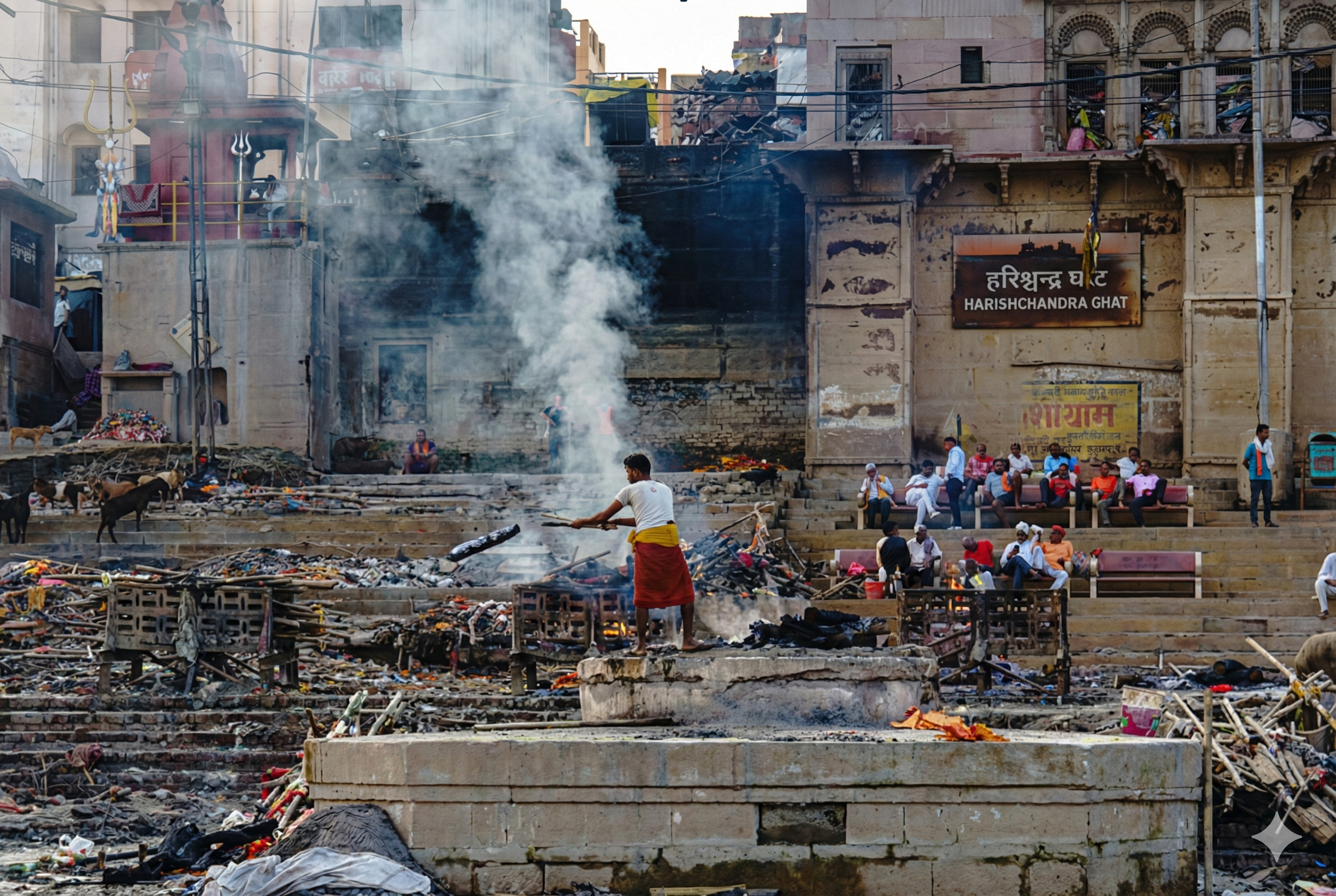
Overview
Varanasi is the city of light, but it is also the city of death. While the famous Manikarnika Ghat draws crowds as the primary burning ghat, Harishchandra Ghat holds an older, quieter, and deeply spiritual significance. Known as Adi Manikarnika (the original creation ground), this ghat is a must-visit for travelers seeking to understand the profound cycle of life and death in Kashi.
The Legend: Story of Raja Harishchandra
The ghat is named after the mythological King Harishchandra, a figure synonymous with Satya (Truth).
According to legend, Sage Vishwamitra tested the King’s integrity, stripping him of his kingdom and wealth. Destitute, Harishchandra came to Kashi and sold himself to a Dom (keeper of the cremation ground) to pay the sage's fee. He spent years working at this very ghat, burning bodies.
The ultimate test arrived when his own son died. His wife, Queen Taramati, brought the body to the ghat, but Harishchandra—bound by his duty—refused to perform the cremation without the fee. Witnessing his unwavering adherence to Dharma, the Gods restored his son’s life and his kingdom.
It is said that because of his penance here, anyone cremated at this ghat attains Moksha (liberation from the cycle of rebirth).
What to Expect
Unlike the tourist-heavy Dashashwamedh, this ghat is raw and unfiltered.
The Atmosphere: Somber yet busy. You will see piles of wood stacked high, families in mourning, and the eternal fires burning.
The "Electric" Change: While traditional wood pyres are still used, this ghat also houses Varanasi's electric crematorium, a modernization aimed at reducing pollution in the Ganges.
The Doms: You will see members of the Dom community managing the fires; they are the custodians of the sacred flame.
How to Reach Harishchandra Ghat
1. From Assi Ghat
By Foot: It is a scenic 20-25 minute walk (approx 2 km) north along the river. You will pass through Tulsi Ghat and the beautiful Chetan Singh Ghat on the way.
By Boat: The most peaceful way. Hire a hand-rowed boat from Assi; it takes about 20 minutes and offers a stunning view of the ghat from the water.
2. From Varanasi Junction (Cantt Railway Station)
Approx. 5 km, Take an auto-rickshaw or e-rickshaw to Sonarpura Crossing or Harishchandra Ghat Road.
3. Our Personalized Transport Services
Why wait? Check our taxi availability and get moving in minutes.
Things to Do at Harishchandra Ghat
While this is a place of mourning, it is also a place of learning.
Observe the Rituals: Watch the Antyesti ceremonies from a distance to understand Hindu views on mortality.
Visit the Temple: Pay respects at the temple dedicated to King Harishchandra, Queen Taramati, and Prince Rohitasva.
Sunset Boat Ride: View the ghat from the Ganges at twilight. The contrast of the funeral fires against the darkening river is a powerful visual.
Meditate: Find a quiet spot on the upper steps (away from the active pyres) for introspection.
Nearby Attractions
Combine your visit with these nearby historic spots:
Kedar Ghat: A few minutes north, known for the Kedarishwar Temple.
Chet Singh Ghat: Famous for its historical battlements and castle architecture.
Karnataka State Ghat: Located immediately adjacent, known for its cleanliness and Mysore-style architecture.
Shri Chintamani Ganesh Temple: Located in the lanes near the ghat, a small but highly revered ancient temple.
Visitor Tips
Best Time to Visit: Early morning for a calmer vibe, or evening to witness the intensity of the rituals.
NO Photography of Pyres: Taking photos of burning bodies or grieving families is strictly prohibited and deeply offensive.
Opening Time: Open 24 Hours
Avoid Scams: If someone approaches you asking for money to buy wood for a "poor family's cremation," politely decline. This is a common tourist scam.
Dress Code: Wear modest clothing covering shoulders and knees.
Entry Fee: Free of Cost